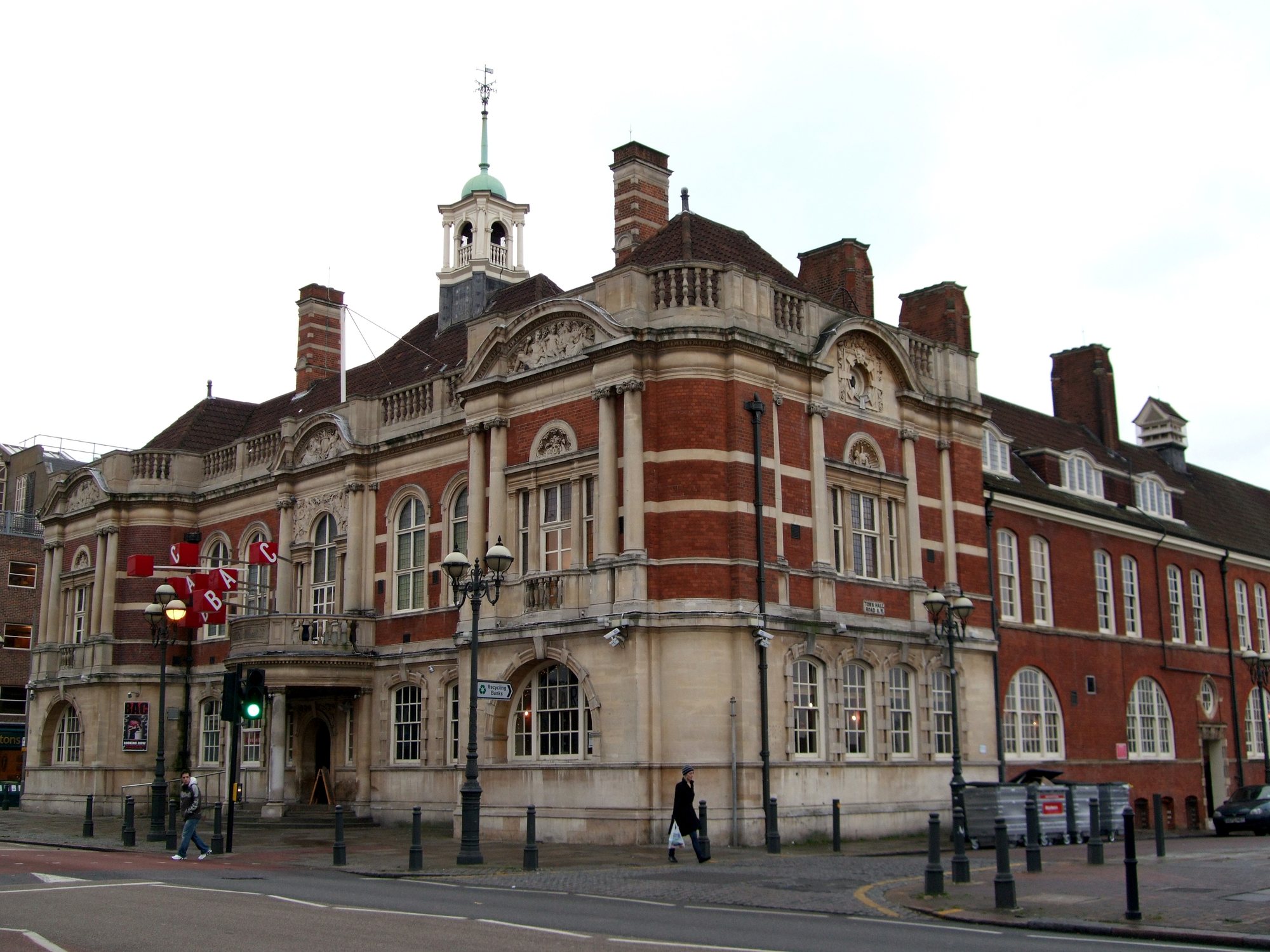
Battersea Arts Centre: the old town hall on Lavender Hill
Battersea Arts Centre is a Victorian town hall on Lavender Hill, SW11, that survived demolition plans and a fire. Here is its story and how to use it.
By Clapham London Editorial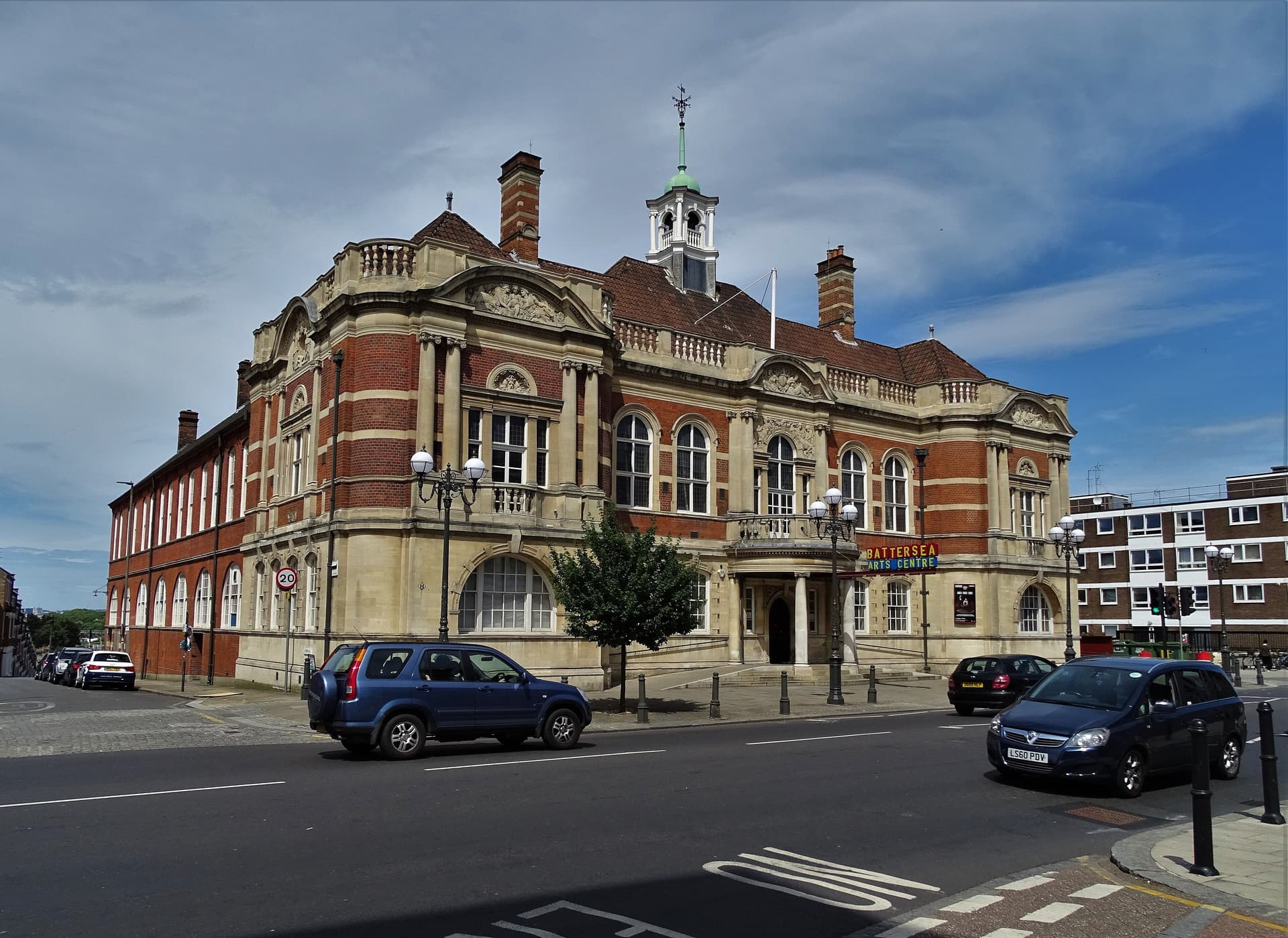
Battersea Arts Centre (BAC) is on Lavender Hill, SW11 5TN, about a 7-minute walk from Clapham Junction station. Strictly it is Battersea, in the borough of Wandsworth, not Clapham proper, but it is the nearest big night out for the Junction and a short hop from the Common. Most shows are Pay What You Can, and you can look around the building without a ticket. Check bac.org.uk before you go, as opening hours vary between listings.
A town hall built for Battersea
Battersea Town Hall opened on 15 November 1893. According to Historic England, it was built in 1892 to 1893 for the Vestry of St Mary Battersea, to a design by E. W. Mountford, chosen in a limited architectural competition in 1891. Lord Rosebery, Chairman of the LCC, opened it. Mountford lived locally and went on to design Sheffield Town Hall and the Old Bailey. The building is listed Grade II*, and an extension by P. E. Pilditch followed in 1899 to 1901.
It was one of a cluster of civic buildings along Lavender Hill in the 1880s and 1890s, which also took in a library, police station, court and post office, with the railway station encouraging the growth. Battersea was a centre of radical politics. John Burns was elected to the LCC in 1890 and became Independent Labour MP for Battersea North in 1892. BAC says he worked from the town hall and helped shape the Latchmere Estate, which it calls the first council housing estate. John Archer, the first Black mayor of a London borough, also has a place in the building’s story, and Paul Robeson visited, according to VisitLondon.
Near demolition, then an arts centre
In 1965 Battersea merged with Wandsworth and the building was gradually mothballed. In 1967 locals rallied against plans to demolish it for an “ultra-modern” swimming pool. It was listed in 1970 and became a community arts centre in 1974, unlocked by Wandsworth councillors led by Martin Linton. When public spending cuts threatened it in 1979, the community saved it, and in 1980 it became an independent charity. BAC took a lease in 1981. Wandsworth Council still owns the freehold. The centre marked its 50th anniversary in November 2024.
Its reputation rests on the “scratch” method, where artists show unfinished work to audiences and refine it from feedback. Jerry Springer: The Opera premiered here in 2002 before moving to the National Theatre.
The 2015 fire and the rebuild
The fire began in the roof on Friday 13 March 2015, at about 4.15pm. WhatsOnStage reported 12 fire engines and 80 firefighters at the scene, and that everyone got out safely. The Grand Hall was destroyed. BAC says the front of the building was saved and reopened 26 hours later. The blaze came during a £13.3m renovation, according to the Museums Association.
Wandsworth Council granted planning permission in May 2016. ArtsProfessional reported that the insurer Aviva paid for the Grand Hall rebuild, backed by a £1m fundraising campaign, the Phoenix Fund. The architects were Haworth Tompkins. The rebuild kept the surviving walls “as found”, in their scorched post-fire state. The Grand Hall officially reopened to the public on 6 September 2018 with a five-month season called Phoenix. A visitor review in The Nudge in 2025 described open rafters overhead, plush seats and photographs of the fire damage behind the Scratch Bar.
How to use it beyond the shows
- Drop in. BAC says it is open all day for anyone to explore, with a café, a bar and spaces for play and relaxing. Shows can turn up in any of its rooms, from the attic to the Council Chamber.
- Scratch Bar. A daytime café and evening theatre bar. CAMRA says it has been open since 2014 and sells bottled and canned beers from local breweries. One listing gives café hours of Monday to Friday, 9.30am to 4.30pm, but older listings differ, so check first.
- With kids. There is an indoor playspace called The Bees Knees and monthly Family Saturdays.
- Heritage and talks. BAC runs heritage events and discussions, plus after-school programmes for young people.
- Artists. VisitLondon says BAC offers free bookable spaces for artists.
Tickets and getting there
Most shows are Pay What You Can, with a recommended price. BAC says autumn 2026 tickets start at £12.50, and anyone who needs to pay less can email boxoffice@bac.org.uk or phone 020 7223 2223. You can also book online or at the box office.
Direct trains run to Clapham Junction from Waterloo and Victoria. Buses 345, 77, 87 and 156 stop on Lavender Hill outside, as do the N77 and N345 at night. Access is step-free by a ramp from Lavender Hill, with a lift to the first floor and accessible toilets. It is a heritage building without air conditioning, so dress for a warm room in summer.